Wheat

Bake Your Lawn

In 2024/25 we invited schools and community groups to ‘Bake your Lawn’!

Grow it, Mill it, Bake it, Eat it, Celebrate it!

Working with Lewes District Food Partnership and Fermento bakery, we provided wheat seed to local community groups and planted seeds with three local schools. Read on to find out more.

If you’d like to know more about the ‘Bake your lawn’ project by the charity Sustain and to buy a guide book. Please visit their website.

If you would like to try this project in your school or community group, the windmill at Windmill Hill in Herstmonceux is now running a seed to loaf project where they can share wheat seed for planting. Find out more on their website.

Wheat harvest

How much space do I need to grow my wheat?

Allow at least 1m² of your garden for the next year to grow your wheat – yes it will take pretty much a year to grow!

If you are growing a winter wheat, sow between September and November.

If you are growing spring wheat, follow the same methods for sowing, but sow in April.

What will I need?

  • A 1m² plot – this will hopefully produce enough wheat to make one loaf of bread!
  • Spade
  • Trowel
  • Rake
  • Hoe
  • Tape measure
  • Long sticks or string
  • Wheat seed – 30g per m²
  • Bird netting, bamboo canes, and twine to make a frame
  • Garden pegs
  • Watering can

Prepare your soil

  • Dig out any weeds and large stones. Break up any large clumps of soil with a spade.
  • If your soil is very poor, you can dig in some peat-free compost.
  • Rake over the soil to make level.

Prepare for sowing your seed

  • Mark your first row 20cm from one edge. Place a stick down to mark the row or a piece of string.
  • Measure 20cm along from the first row and place another stick or a piece of string. Continue to do this along the bed so you have sticks every 20cm along the bed.
  • Use a hoe or a spade to make a channel 5cm deep alongside each stick.

Sow your seed

  • Sprinkle the seed into the channels all the way alongside each stick.
  • Once all the channels are filled with seed, brush over the soil to cover the seed.
  • Water the soil. Only water again if the weather is dry for a long time.
  • To protect your seed from being eaten by the birds, make a frame around your bed with bamboo canes and twine. Cover this with bird-proof netting. Secure to the ground with pegs. I like to sit a length of wood on the edge to weigh the net down.

Wait for your wheat to grow

  • Remove any weeds as they grow.
  • The wheat will look like grass growing for a long time then will suddenly grow longer spikes which will turn into wheat.


Thank you to the students of Seahaven Academy for the demonstration photos.

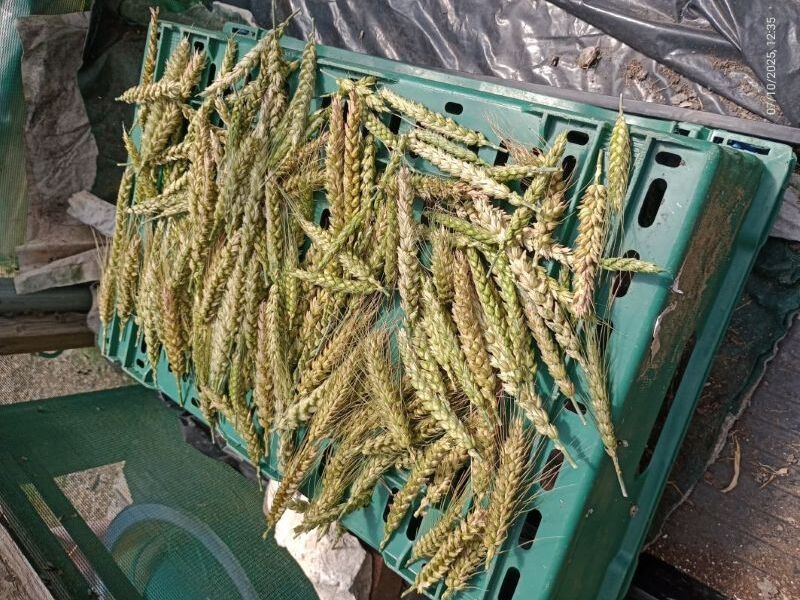
Wheat drying

Harvesting

  • Harvest from late July to early September when the wheat has turned a golden brown.
  • Hold onto a bunch of stalks and cut at ground level. These can be hung up or propped together to leave to dry further.
  • Or – cut the ears of wheat from the stalk, spread over a tray and leave in a dry place until it feels fully dry. This should take a few days.
  • Research threshing and winnowing for full instructions of the next stage. The outside ‘chaff’ will need to be removed from the wheat grain. Small amounts can be separated with your hands.
  • If you don’t have a flour mill, small amounts of wheat can be ground into flour with a pestle and mortar or a high speed blender.


Thank you to Landport Community Garden for sharing a photo of their wheat drying.

Baking

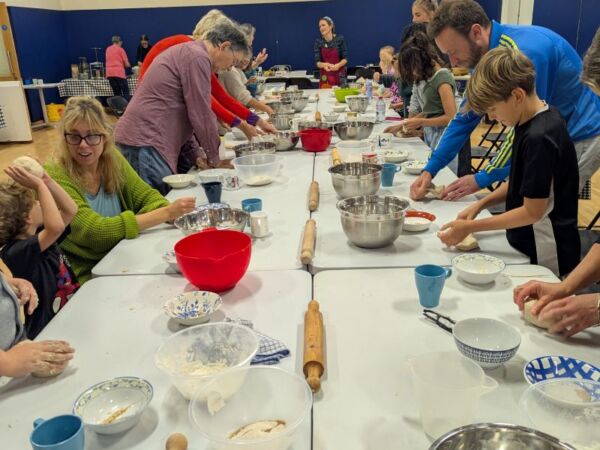
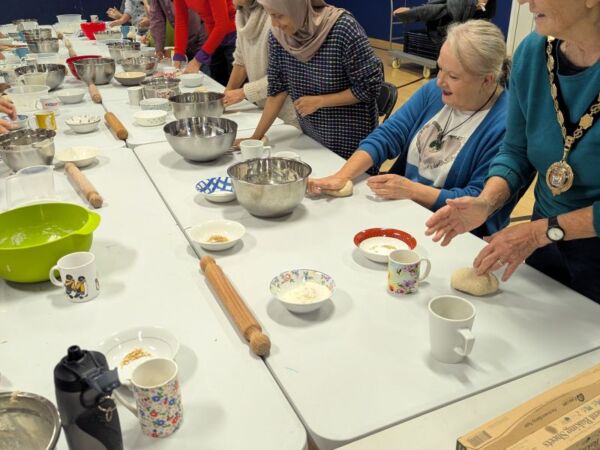
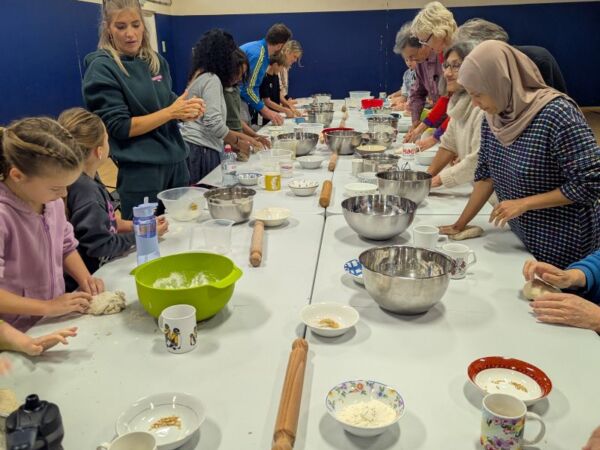
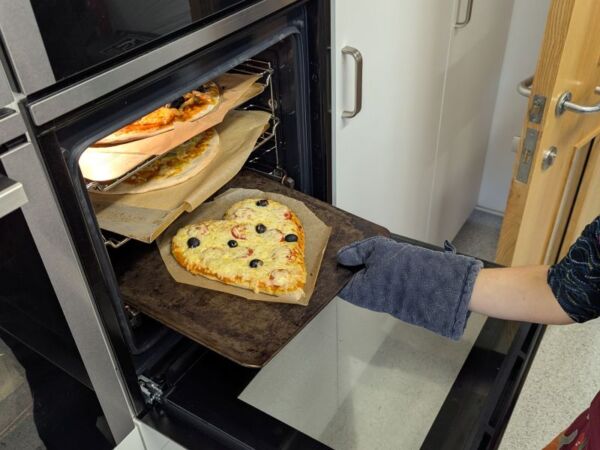
Once your wheat is ground into flour, you can make your bread. We decided to make pizza with our wheat. We held sessions with schools and a community workshop which was lots of fun!

Pizza dough and tomato sauce recipe


This project began in 2011 by the Real Bread Campaign – a campaign by Sustain, the alliance for better food and farming. Taking children and young people on the Real Bread journey from seed to sandwich.

The project helps teachers, and people working in community youth groups, to guide children on taking a handful of organic wheat and grow it, mill it, bake it, eat it.

Sharing Skills is joining with The Lewes District Food Partnership and Fermento bakery to support schools and people of any age in the community to join in.

Contact hello@sharingskills.co.uk to receive your wheat and get growing!

To read case studies from groups who have ‘Baked their lawn’ and find out more about the Real Bread Campaign, visit their website.


Thank you to Fermento bakery for allowing us to share photos of their bakery, Seahaven Academy students for the photos of their wheat planting and Melissa Askew  and Georg Eiermann for the use of their wheat photo from Unsplash.